
-
September 29, 2026
- 0 Comment
Can Ghana Heal Her Waters? What the CSIR-Water Research Institute is Telling Us
By: Bismark Awinbire Akurugu, Saada Mohammed, Jacob Agyekum, Franklin Obiri-Nyarko
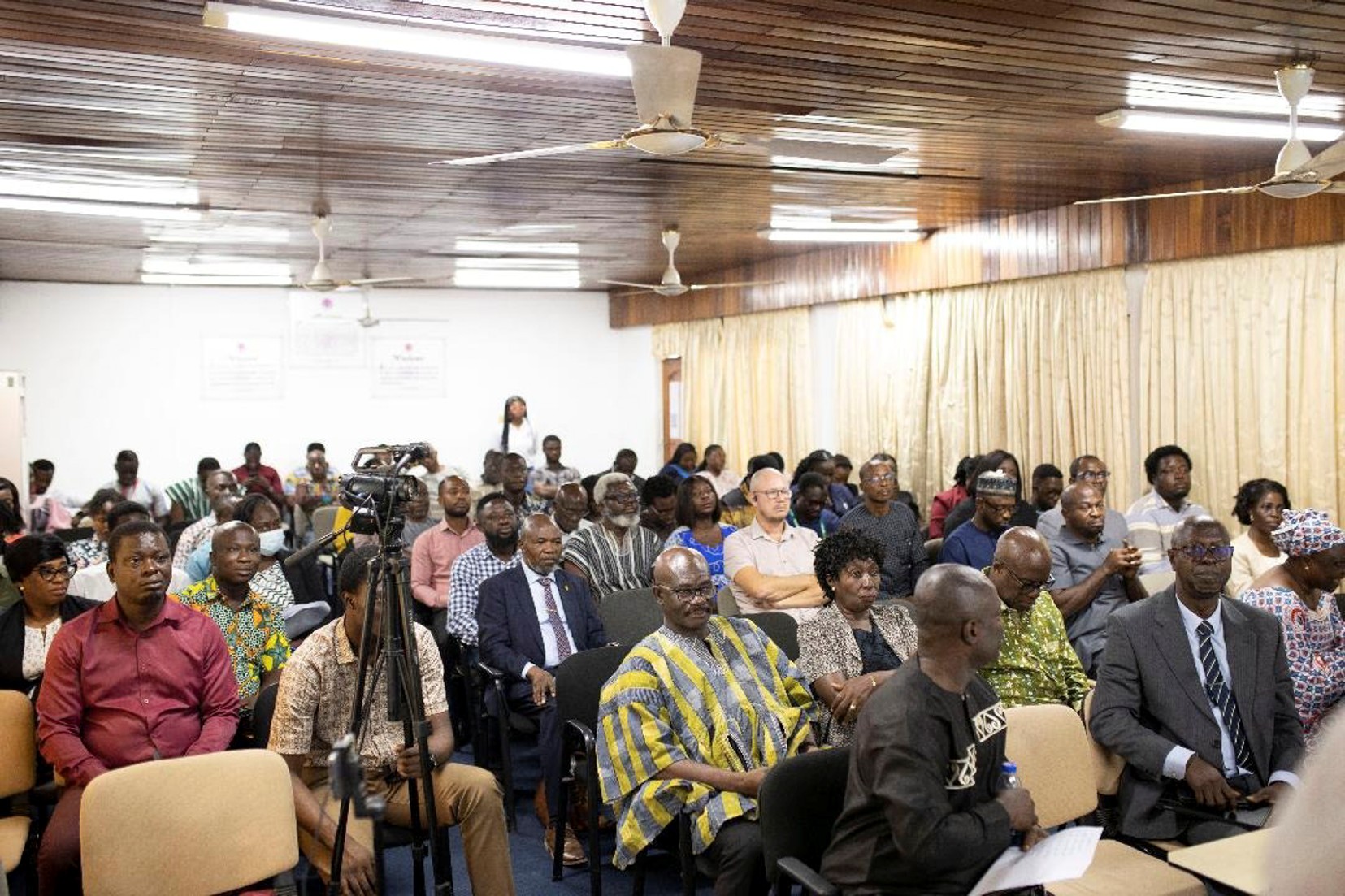
At the Mid-Year Review, held alongside the 30th anniversary celebration of the CSIR-Water Research Institute (CSIR-WRI), the Institute organised a series of presentations to disseminate research findings and contribute to the broader discourse on Ghana’s water sector. The event was held at the Institute’s premises in Accra in August 2026 and brought together stakeholders from a range of institutions, including the Water Resources Commission, National Development Planning Commission, Ghana Hydrological Authority, International Water Management Institute, Crops Research Institute, Environmental Protection Agency, Ghana Maritime Authority, and CSIR-Institute for Industrial Research, among others.
A presentation by Dr Franklin Obiri-Nyarko, titled “Can Ghana Heal Her Waters? Towards Sustainable Remediation of Our Polluted Water Bodies,” highlighted the intrinsic connection between surface water and groundwater and the threats posed to these resources by illegal small-scale mining, commonly referred to as galamsey. The presentation noted that approximately 60% of Ghana’s water bodies were polluted. It also highlighted reported health concerns in galamsey-affected areas, including respiratory disease cases recorded by the Ghana Health Service, which reportedly reached 560 per 100,000 people in 2024, more than twice the rate recorded in unaffected areas.
A central message of the presentation was that no single remediation technology can provide a substitute for an integrated and sustainable response to Ghana’s water pollution crisis. Complex, multi-layered, and persistent contamination requires a combination of pollution-source control, treatment, ecological restoration and continuous monitoring, implemented over sustained periods rather than through one-off technical interventions. International examples, including the restoration of the River Thames in the United Kingdom and groundwater remediation at Hinkley in the United States, demonstrated how sustained investment, effective regulation and long-term institutional commitment can contribute to the recovery of severely degraded water resources.
The ensuing discussions further stressed that the success of any remediation approach, however promising and regardless of its technical potential, depends on effective regulatory enforcement and meaningful community participation and ownership. The panel discussion brought forth several recommendations, including stricter regulation of mining chemicals (e.g., mercury, cyanide, etc.); provision of alternative and reliable water sources; development of viable livelihood alternatives for affected communities; and greater application of nature-based remediation approaches, including phytoremediation, bioremediation, the use of hyperaccumulator plants and appropriate sorbent materials such as zeolites. Participants also called for stronger public education and wider dissemination of research findings on the environmental and health impacts of illegal mining, particularly within affected communities.
The discussions also highlighted the importance of embedding remediation costs within small-scale mining concession licensing frameworks and increasing investment in research and development to advance home-grown remediation technologies suited to Ghana’s environmental and socio-economic conditions. Ultimately, the deliberations are a reminder that the next chapter of restoring Ghana’s waters, already in crisis, will be written not by any single institution, but by the collective will of researchers, regulators, and the communities living along these waters.
All authors are affiliated to Water Research Institute of the Council for Scientific and Industrial Research (CSIR-WRI), Accra, Ghana
- Dr. Bismark Awinbire Akurugu is a hydrogeologist. Email:bismarkakurugu@yahoo.com
- Ms Saada Mohammed is an analytical environmental chemist. Email: saadaking@yahoo.com
- Dr. Jacob Agyekum is a climate scientist. Email: jacoblyff@gmail.com
- Dr. Franklin Obiri-Nyarko is a hydro-geochemist. Email: fonyarko@yahoo.com