
Beyond the Flush: What the Ashaiman Wastewater Treatment Plant Tells Us About Antimicrobial Resistance
Karyn Ewurama Quansah, Regina Ama Banu, Ayesha Algade Amadu, Lady Boamah Adomako, Mark Osa Akrong
Most of us never think about what happens after we flush. The water disappears, and life moves on. But it does not really vanish. When sewered, it travels through drains and pipes to a treatment plant, carrying traces of everything we have sent down with it; chemicals, nutrients, bacteria and, more troublingly, bacteria that antibiotics can no longer kill. Does a waste treatment plant remove them? That is the question Mrs. Regina Ama Banu and her team set out to answer at the Ashaiman Wastewater Treatment Plant.
She presented the findings at the CSIR-Water Research Institute’s Mid-Year Review in August 2026, held as part of the Institute’s 30th anniversary celebrations. Her presentation, “Urban Sanitation Infrastructure Performance, Antimicrobial Resistance (AMR) Realities and Physicochemical Quality: A Case Study of the Ashaiman Wastewater Treatment Plant,” addressed the sub-theme of wastewater, sustainability and human health under the Review’s broader theme, Water-Environment-Food-Health Nexus: Building Resilience for the Future.
Her findings show that the Ashaiman Wastewater Treatment Plant is more than a sanitation facility. It is a window into a much larger public health story: antimicrobial resistance, or AMR. AMR is the growing ability of microorganisms to survive medicines designed to kill them. It may sound like a subject confined to hospitals and laboratories, but it touches everyday life. It can be the difference between an infection that clears after a course of antibiotics and one that no longer responds to treatment.
The scale of the problem is enormous. Worldwide, nearly five million deaths each year are associated with infections that no longer respond to antibiotics, with more than a million directly attributable to resistant bacteria. Ghana is not shielded from the problem; more than 40% of E. coli bloodstream infections reported in the country are resistant to third-generation cephalosporin antibiotics.
Against this backdrop, Mrs. Banu and her team at the CSIR-Water Research Institute’s Environmental Microbiology Laboratory examined what happens to antibiotic resistant bacteria as wastewater moves through a treatment system.
The Ashaiman plant, commissioned in 2023, treats up to 1,800 m³ of wastewater a day from Ashaiman New Town and TDC Quarters. The team collected samples at three points along the treatment process: the inlet, where raw wastewater first enters the plant; the disinfection tank; and the polishing pond, the final stage before treated water returns to the environment. Each sample was tested for E. coli and Extended Spectrum – producing E. coli. ESBL-producing bacteria can resist several commonly used antibiotics known as cephalosporins.
The wastewater treatment plant is doing a remarkable job in reducing bacterial contamination. E. coli bacterial counts reduced from about 49 million per 100 mL in untreated wastewater to just 46 per 100 mL after treatment. ESBL-producing E. coli dropped from roughly 2.88 million to just 5 per 100 mL. That reduction shows how effective the treatment process can be before treated water leaves the system.
The resistance profile of the bacteria across the system, however, tells a more complicated story. ESBL-producing E. coli isolates were recovered throughout the treatment system, from the influent to the post disinfection stage About 54% of the isolates analysed were resistant to multiple antibiotics, while a smaller number were resistant to nearly all, or most, of the antibiotics screened. Resistance to tetracycline was also common, occurring in close to 46% of the isolates tested. Only five ESBL-producing E. coli per 100 mL remained after treatment. Yet those few isolates matter. This is because multidrug resistant bacteria, even in small numbers, escaping into the environment can pose risks. In other words, the treatment process removes the bulk of the bacterial contamination, but the question the resistant bacteria that survive remain a concern even when their numbers have fallen sharply.
The implication is that wastewater doesn’t simply vanish once it leaves the household. If discharged untreated, it can carry a hidden reservoir of resistant bacteria into rivers, soils, and communities. That’s why a well-designed and well-maintained treatment plant is one of the strongest barriers we have against the spread of antimicrobial resistance.
Beyond removing microbes, the Ashaiman plant also enhances overall water quality. Conductivity, suspended solids, ammonia and organic loads – measured through Biochemical Oxygen Demand (BOD) and Chemical Oxygen Demand (COD) – , all declined during treatment, with most parameters meeting the Ghana GS1212:2019 and the WHO/EU/EPA standards.. The findings point to the value of wastewater treatment infrastructure not only for sanitation, but also for environmental protection and public health. Across Ghana, there is a need for functional treatment plants, stronger maintenance systems and continued environmental surveillance for antimicrobial resistance. The Ashaiman experience demonstrates the contributions well-functioning infrastructure can make and highlights the need to expand and upgrade wastewater infrastructure nationwide.
There is also an opportunity hidden in the waste itself. With appropriate treatment, monitoring and safety standards, wastewater does not have to be viewed only as something to dispose of. It can become a resource for water reuse, supporting sustainability while strengthening resilience and protecting public health. What happens after we flush, then, is connected to much more than sanitation.
The research at the Ashaiman Wastewater Treatment Plant highlights the environmental dimension of antimicrobial resistance. The issue extends beyond hospitals into the sanitation systems that coveys human waste and, ultimately , into the wider environment. That connection is central to a One Health approach, which recognises that human, animal and environmental health are closely linked. The flush may end the journey for us. For wastewater, it is only the beginning.
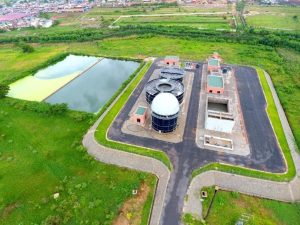

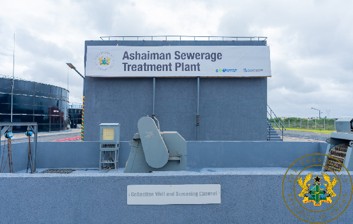
The Ashaiman Wastewater Treatment Plant, commissioned in 2023 to serve Ashaiman New Town and TDC Quarters, and the four-stage process behind it tracking how resistant bacteria are reduced to within recommended safety limits before treated water is released.
Photos Sources: L-R, [ghanawashj.net; primenewsghana.com] / Diagram generated using: Claude.AI
All authors are affiliated to Water Research Institute of the Council for Scientific and Industrial Research (CSIR-WRI),
- Mrs Karyn Ewurama Quansah is an environmental microbiologist. Email: karynquansah@gmail.com
- Mrs Regina Ama Banu is an environmental microbiologist. Email: reginamabanu@gmail.com
- Dr Ayesha Algade Amadu is a biological wastewater treatment and resource recovery expert. Email: amalgade24@gmail.com
- Mrs Lady Boamah Adomako is an AMR, WASH, and environmental epidemiology expert. Email: asantewa84@googlemail.com
- Dr Mark Osa Akrong is a microbiologist and aquatic ecologist. Email: markosaakrong@gmail.com