
Protecting the Volta River System: The Water Quality and Socio-Economic Impact of Illegal Mining
Zita Naangmenyele Abuntori; Prosper Bazaanah; Chrysogonus Anab; Emmanuel Tetteh-Doku Mensah; Gerard Quarcoo; Emmanuel M. Obeng Bekoe; Eugene Sintim Gyabaah; Millicent Ewurama Adu-Boakye; Abdul-Latif Salifu; and Yaa Agadzi Asabea
Illegal mining, popularly known as ‘galamsey’, is one of Ghana’s most pressing environmental challenges. Beyond the destruction of forests and farmlands, its impacts are increasingly being felt in the country’s rivers, threatening water security, public health and the livelihoods of communities that depend on these resources. To better understand these impacts and shape discourse around Ghana’s water, environment, food and health systems, the CSIR-Water Research Institute (CSIR-WRI), convened a Mid-Year Review in Accra on August 2026 as part of the its 30th anniversary celebrations under the theme “Water-Environment-Food- health nexus: Building Resilience for the Future”. As part of the anniversary programme, the Institute provided a platform for researchers and stakeholders to share evidence and engage on emerging challenges affecting Ghana’s water resources.
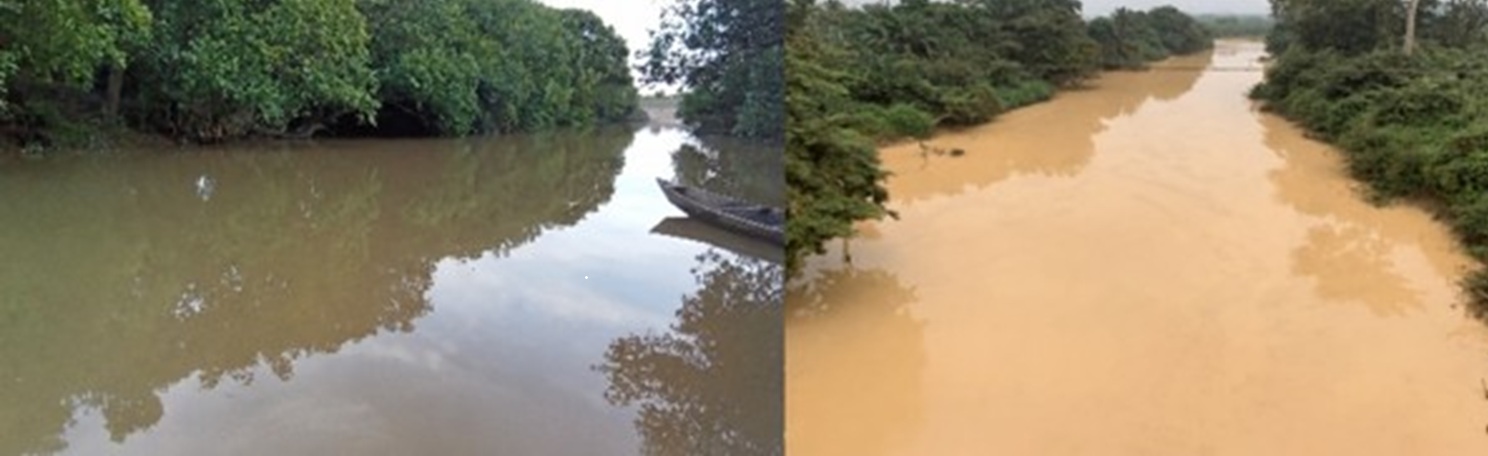
In this context, Ms Zita Naangmenyele Abuntori and Dr Prosper Bazaanah, presented a TAMA Foundation commissioned study, “protecting the Volta River System” The water quality and socio-economic impacts of illegal mining”, which assessed the water quality and socio-economic effects of illegal mining on riparian communities, covering 26 water-sampling locations of the main Volta and selected tributaries from the northern reaches of the system to the south. Contrary to the assumption that the Volta River system is safe from illegal mining activities, the water quality assessment revealed high levels of turbidity, and elevated concentration of cadmium, lead, chromium and cyanide levels that exceeded safety limits in most of its tributaries and parts of the main volta system.
 Kpwalugu – white Volta Nasia-Tributary of White Volta
However, the Lower Volta remained relatively free of heavy-metal contamination with the downstream of the confluence towards the coast showing comparatively clearer waters. For communities living around these water bodies, pollution is not simply an environmental issue—it directly affects everyday life. Illegal mining, deforestation, land degradation and agricultural runoff were identified as the leading causes of water pollution. Households who depend heavily on the river and its tributaries for farming, trading, mining and fishing are already experiencing the impacts. They report of declining agricultural productivity, loss of economic trees, pressure on fishing and farming, abandoned mining pits that pose safety risks, desecration of graveyards and grooves and concerns about school attendance and other social problems.
Although boreholes and sachet water were the most commonly reported drinking-water sources, people who still rely on the polluted rivers and streams reports of skin rashes, urinary tract infections, diarrhoea, cough, fever and other water-related illnesses. Community members are already observing changes in the colour and smell of river water, raising concerns about its safety for domestic use. Some also report growing difficulty in preparing traditional foods such as Tuo Zaafi, while others express concerns about falling ill after consuming food prepared with the polluted water. At the same time, residents expressed frustration over weak enforcement of mining regulations and limited involvement of communities in decisions affecting their lands and water resources.
Protecting the river system requires sustained, integrated action beyond temporary crackdowns on illegal mining. Key priorities should include continuous water-quality monitoring, effective enforcement of environmental regulations, restoration of degraded river catchments, viable alternative livelihoods, targeted health interventions and meaningful community participation. Given the river system’s critical role in sustaining ecosystems and the livelihoods of communities across its upper, middle, and downstream reaches, its protection is ultimately about safeguarding public health, economic well-being and the future of the people who depend on it.
All authors are affiliated to Water Research Institute of the Council for Scientific and Industrial Research (CSIR-WRI), Tamale, except Dr Chrysogonus Anab.
- Zita Naangmenyele Abuntori is an Environmental and Water Quality Specialist. Email: zitangmen2@gmail.com
- Dr Prosper Bazaanah is a Water Governance Specialist. Email: pbazaanah@gmail.com
- Dr Chrysogonus Anab is the Executive Director of TAMA Foundation Universal: Email: chrysogonus124@yahoo.com
- Dr Emmanuel T. Mensah is an Aquaculture Specialist. Email: meted2@gmail.com
- Dr Gerard Quarcoo is an Aquatic Microbiologist. Email: geroquabs@gmail.com
- Mr Emmanuel M. Obeng Bekoe is an Aquatic Microbiologist. Email: sirbeks@yahoo.co.uk
- Mr Eugene Sintim Gyabaah is an Environmental Chemist (Waste Water):Email: eugenist.7@gmail.com
- Ms Millicent Ewurama Adu-Boakye is a Water Quality Specialist: Email: ewura.milly@gmail.com
- Mr Abdul-Latif Salifu is a Water Quality Specialist. Email: suadnnihad@gmail.com
- Ms Yaa Agadzi Asabea is an Aquaculture Specialist. Email: yaasabea27@gmail.com