
Water-Energy-Food-Environment Stakeholder-led Assessment And Planning For Ghana
Sylvester Afram Boadi, Frank Teye Oblim and Emmanuel Obuobie
Stakeholder consultations and participation in development infrastructure are regarded, globally, as key sustainability mechanisms. This is because when people participate in the planning of issues related to their own development, the delivered outputs tend to reflect their actual needs and interests, which engenders a sense of collective ownership and responsibility. The Water Research Institute of the Council for Scientific and Industrial Research (CSIR-Water Research Institute) is therefore calling for a streamlining of mandates of the different organisations in Ghana’s water-energy-food-environment (WEFE) sector to eradicate unnecessary competition and foster constant engagement and sustained collaboration among all stakeholders. This call has become necessary as existing institutional and policy barriers continue to hinder effective coordination in Ghana’s WEFE sector. Mandated institutions find it difficult to effectively engage, collaborate and coordinate cross-sectoral development activities when key stakeholders see themselves as competitors rather than partners working together to deliver sustainable water, energy, food and environment solutions for Ghana.
There is therefore a need to build on the increasing number of multi-sectoral and multi-stakeholder platforms to achieve participatory and inclusive planning for the development and management of all WEFE infrastructure in Ghana. A better coordinated and truly participatory stakeholder-led assessment, planning and management of development infrastructure in Ghana’s WEFE sector would deliver better, more resilient and sustainable solutions that offer the best pathways for addressing our water, energy, food and environment challenges, including the ongoing pollution and degradation issues.
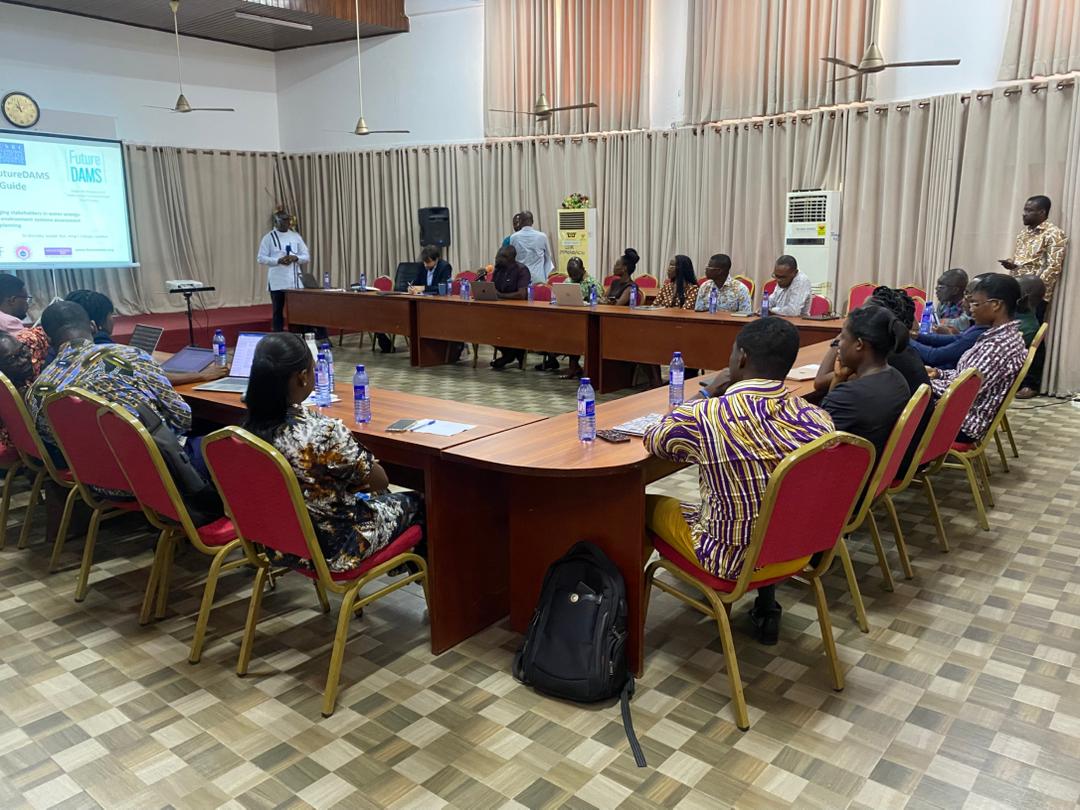
These perspectives are the key findings coming from the ‘Creating a policy manual for Ghana: water-energy-food-environment stakeholder-led planning’ project (Ghana FutureDAMS Manual project) being implemented by the CSIR-Water Research Institute and King’s College London. The project is led by Ing. Dr. Emmanuel Obuobie and Dr. Barnaby Dye, and funded by ESRC Impact Acceleration Account, Social Science Impact Fund. A key output from the project is the Ghana FutureDAMS Manual meant to guide stakeholder-led assessment and planning for WEFE infrastructure in Ghana. A synthesis of the key findings from the project were presented at the CSIR-Water Research Institute’s 2026 mid-year review programme, organised from the 11th to 13th August 2026. The programme brought together national and sub-regional stakeholders in the water, energy, food, health and environment sectors of Ghana and West Africa to deliberate on the theme ‘Water-Environment-Food-Health Nexus: Building Resilience for the Future’.
To build a secure, equitable, sustainable and resilient water, energy, food, environment and health sector for Ghana, there is a need to make a case for improved stakeholder collaboration and engagements. This is mainly because participatory stakeholder engagements and better cross-sectoral coordination are critical tenets when it comes to the planning of infrastructure targeted at responding to multiple needs of multiple stakeholders. Based on lessons learnt from past decision-making around WEFE infrastructure projects in Ghana (e.g., Akosombo Dam, Bui Dam, etc.) and state-of-the-art best international practices, the Ghana FutureDAMS Manual project makes a case for better stakeholder engagements during the planning, construction and post-construction phases of WEFE infrastructure. The project therefore proposes a 9-step process for WEFE infrastructure stakeholder-led assessment and planning (see Figure 1). The planning and assessment of any WEFE infrastructure should start with fore-sighting the development needs of the society or country in question and not with a specific infrastructure project in mind. Fore-sighting these needs should then lead to a review of the different investments required to meet the outlined development needs.
A participatory stakeholder process is then used to review all the infrastructure options that could help address the development needs, supported by the co-creation of a WEFE simulation model to project the possible synergies and trade-offs associated with the different infrastructure options. It is important that the modelling process is iterative and stakeholder driven. A report is then prepared detailing a set of infrastructure recommendations. There is the need for participatory studies that cover the potential impacts and mitigation of the various recommendations. Beyond this, there are three stages anchored on further stakeholder engagements, that is, a detailed design of compensation scheme (i.e., replacement of lost assets) and benefit-sharing mechanism (i.e., sustainability interventions focusing on long-term positive development impacts that will accrue to project-affected communities); rigorous stakeholder engagement during construction; and mandating an organisation responsible for post-construction and long-term accountability for all agreed sustainability and management mechanisms, including grievance or conflict resolution.
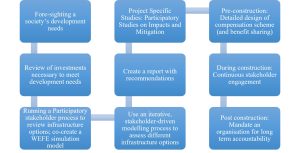
Figure 1: The 9-step process for WEFE infrastructure planning
In order to implement this 9-step process, the actual process for forming and convening the stakeholder groupings should be guided by the 4-part procedure outlined in Figure 2. The facilitator, who should be neutral, non-partisan and capable of understanding the interests, power dynamics, cultures and social norms, etc. of all the stakeholders, conducts a background analysis that details the context within which the WEFE infrastructure planning is taking place. A detailed participatory stakeholder identification and analysis follows, which among other things sets out the platform for identifying the interests and characteristics of all stakeholders to inform perspectives on how to mitigate barriers to equal participation. The facilitator then considers how and where to access data for the integrated modelling/simulation step to be conducted and discusses the best time and venue for convening the stakeholder engagements, in a way that no stakeholders are left out. For instance, convening the stakeholder engagements during planting or harvesting season for farmers might hinder participation by farmer representatives, while the onset of the rainy season could cut-off participants who reside in places linked by unpaved or feeder roads. The facilitator should, thus, have mitigative measures or avenues for these and other barriers to equal participation that may come up to allow for a truly participatory process.
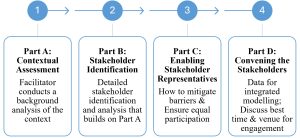
Figure 2: The 4-Part Recipe for Forming and Convening a Stakeholder Group
It is therefore clear that integrating truly participatory stakeholder consultations into the planning and implementation of WEFE infrastructure projects present challenges such as additional logistics and costs, among others. However, the advantages of better stakeholder consultations, collaboration and coordination between interconnected organisations and interest groups far outweigh any challenges. Thus, the way forward for Ghana is to work towards cross-sectoral collaborative planning, development, governance, and funding mechanisms that bring all stakeholders together for the implementation of WEFE infrastructure projects. This would put the country on a path towards achieving the mutual objectives of secure and equitable water, energy and food for all, while not compromising environmental sustainability goals. Inclusion and integrated planning and management built around improved coordination among stakeholders might be the way forward to tackling current short-term and disconnected development planning and implementation challenges in the water, energy, food and environment sector of Ghana. It is therefore recommended that Ghana properly funds the National Development Planning Commission (NDPC) to carry out its legal mandate of leading cross-sectoral planning and coordination of decentralised and participatory national development strategies. The NDPC as a neutral body can override sector-specific interests (such as energy dominating water and food components on multi-purpose projects) and enforce an integrated, multi-stakeholder national framework due to its mandate to guide Ghana’s development through short, medium and long-term national development policies and plans.
Dr. Sylvester Afram Boadi is a Geographer and Research Scientist with the Surface Water and Climate Change Division, CSIR-Water Research Institute, Accra-Ghana. Email: sylvest2009gh@gmail.com
Ing. Frank Teye Oblim is a Water Resource Engineer and Assistant Research Scientist at the Surface Water and Climate Change Division, CSIR-Water Research Institute, Accra-Ghana. Email: oblim.teye@yahoo.com
Ing. Dr. Emmanuel Obuobie is a Hydrologist, Principal Research Scientist and Director of CSIR-Water Research Institute, Accra-Ghana. Email: obuobie@yahoo.com